
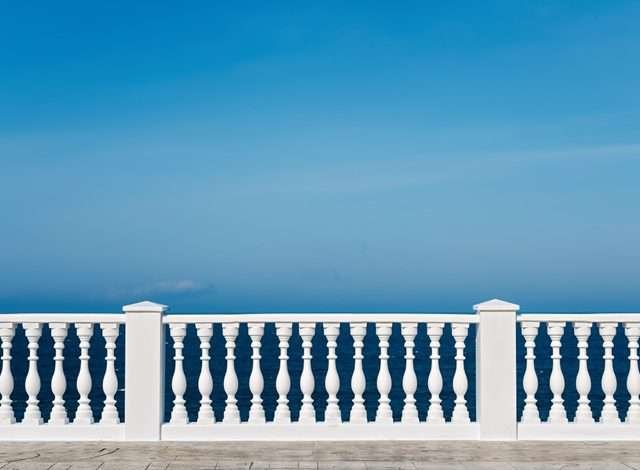
A balustrade is a series of vertical posts (referred to as balusters) that hold a handrail, usually on a staircase, balcony, landing, or terrace. Their primary function is to act as a barrier against falls, but they also contribute significantly to a space’s look, both interior and exterior.
Balustrades may be constructed using materials such as wood, metal, glass, and stainless steel. The type and finish that you use can completely transform the appearance of a property, whether you are aiming for something more conventional or contemporary.
Where They’re Used
Balustrades are employed wherever there is a raised edge on which individuals might fall — on staircases, mezzanine levels, balconies, decking, and roof terraces. Within the house, they are most commonly encountered along the edge of stairs and landings. Outside the house, they appear on patios, porches, balconies, and garden steps.
In office buildings, balustrades are not just a safety necessity, but frequently an integral part of design. Glass and steel choices are particularly sought after in offices, hotels, and stores where a modern, minimalist appearance is required.
Various types of balustrades
There’s something for every purpose, budget, and style in a huge variety of balustrade types.
Timber balustrades are used in older or period houses. They provide warmth and character, and can be painted or stained to blend in with the rest of the décor.
Metal balustrades, like wrought iron or powder-coated steel, are durable and require little maintenance. They’re usually applied in outdoor spaces or in staircases that require a touch of detail or design.
Glass balustrades are a favorite in contemporary homes and buildings. They have a clean, airy atmosphere and do not obstruct light. You can have framed or frameless types, with or without a handrail.
Stainless steel balustrades give the sleek, long-lasting look — usually used with glass panels or cables. They’re typically used in commercial environments, coastal regions, or where a weather-resistant finish is required.
Building Regulations and Safety
Within the UK, balustrades have to be up to a certain level of safety. For instance, if there is a drop over 600mm (about 2 feet), there has to be a proper barrier in place. The internal balustrades’ minimum height is usually 900mm, but for exterior balconies or raised decks, it’s commonly 1100mm.
Gaps between glass panels or balusters should be narrow enough to stop children from slipping through — usually not wider than 100mm.
Handrails should also be secure, firmly attached, and not slippery to hold.
When you’re replacing or fitting a replacement balustrade, it’s worth adhering to these rules, particularly on rented property or commercial premises where you might have to pass inspections.
Things to Consider Before Choosing
When choosing a balustrade, think about where it’s going, how much maintenance you’re willing to do, and the style of the space. For example, timber looks great in a country home but may need more upkeep than steel or glass. Glass is great for letting in light, but it may show fingerprints and marks more easily.
It’s also worth taking into consideration the view. If your house overlooks a garden, hillside, or seafront, an open glass balustrade will not interrupt the view. However, if privacy is higher on your agenda, you may opt for frosted glass or a solid form. Balustrades Lincolnshire aren’t just a safety element — they’re an outward-facing feature of your home or building. If you’re after something sleek and minimalist, or something more traditional and ornate, the correct balustrade can bring value and style to any area.

