
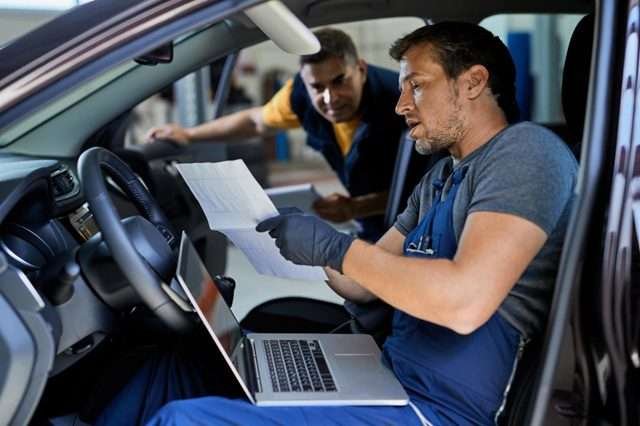
Performance tuning changes vehicle behavior in ways that go beyond simply adding horsepower. When drivers get feedback from their personal vehicles and driving experience, it’s their new understanding of daily driving and what they anticipate as different that makes them realize precisely what changes post-tuning. When this happens, it’s easier to set expectations to avoid disappointment by looking at purely numerical statistics.
Throttle Response
The first thing many people notice is how quickly the vehicle responds to throttle input. Throttle mapping from the factory includes delays and relatively gradual power delivery to create smoothness and efficiency. When a vehicle is tuned, it responds much faster to an inlet press on the pedal.
This responsiveness makes it feel like there are no connections between the driver and the vehicle. The gap from pressing the pedal and feeling the acceleration is no longer there. For driving on a regular basis, this makes it easier to merge, ease past someone, or navigate as needed since the vehicle does what it needs without lag.
Power Delivery
Tuning changes how power comes where it didn’t used to. Most factory settings make power a smooth, steady increase over time. Performance tuning can change this curve and provide more power in ranges where most drivers need it day-to-day.
People notice tons of acceleration with mid-level power where they usually sit. Specialists at sites like https://racemeofficial.com/ can arrange these specifics for driving style and purpose of use, helping vehicles feel far more capable within normal acceleration limits.
Some performance tuning provides higher RPM for racing applications, while others use low-end torque for towing or street-based efforts. The difference is noticeable regarding where tuning excels and how drivers use their vehicles.
Transmission Reaction
With transmission work in addition to engine tuning, programs get recalibrated, changed shift points, firmness, and reaction all shift along with the power increase. It’s just as noticeable as a power increase, especially for automatic transmissions.
Firmer shifts drive power more readily to the wheels as well, but feel different from the typical gentle factory shifts. Higher upshifts keep the engine in its band longer. Shift logic changes can hold gears instead of upshifting as attempts to increase fuel economy.
Transmission shifts are love/hate, depending on each driver. What feels exceedingly responsive and engaging to one person feels incredibly harsh and aggressive to someone else. These facts are true as to why transmission tuning matters all the same as engine information.
Fuel Economy Varies
While fuel economy can shift significantly—from stock to tuned—it’s clear that fuel economy champions and performance tuning have different goals than everyday drivers.
From a conservative aspect with limited appeal, fuel economy can improve through better running conditions, fuel efficiency, and proper combustion, which requires far less effort just to maintain speed.
From an aggressive standpoint for performance, the last thing drivers care about is fuel economy once tuned performance is available. The vehicle can use a lot of fuel, and it certainly does if given the opportunity, as drivers assume that at that point, they might as well go all out since it’s available.
The point remains that many people notice better highway fuel economy after tuning because their vehicle doesn’t struggle to keep up with its normal limits. It uses far less effort once at cruising speed. In stop-and-go or slower, city settings, this becomes worse because generally the driver gives in to temptation.
Sound Changes
Either directly related or not related, tuning changes the audio experience from exhaust-driven characteristics heard over time, either from pushing pedal locations or simply tuning adjustments without any change.
Vibration sensation can change too throughout the drivetrain. Firmer engine mounts or vibrations that come with idling create something more mechanical. Whether it’s desirable or not depends entirely on preference.
Daily Drivability
Not all daily drivability improves post-tuning—or at all. Aggressive settings create rough idle, surging at steady speeds, or less-than-stellar features at lower speeds, which might be acceptable for dedicated vehicles but annoying for daily ones.
Quality tuning blends effective performance gains with daily drivability and expectations for starting and idling successfully and doing what’s asked during normal driving. The improvements come when expected but do not bleed into the everyday experience.
Temperature and Operating Conditions
With a cooled system good enough for basic operating conditions, systems push to their limits once driven beyond their capacity.
People notice excessively hot temperatures more frequently, including under the duress of constant shifting with no cooling relief. The temperature gauge spikes higher than expected—but with excessive output, it’s no surprise that it’s a demand, however, not always in appreciated conditions.
On the contrary, cold-weather operation can change too—the factory adaptation to cold starts may differ when tuned, or at least how quickly someone can bring it to temperature. Most people won’t ever notice such things unless they’re looking for them actively.
Wear Patterns Increase
Increased performance means increased attention to wear patterns. Drivers feel excessive wear on tires when greater horsepower output significantly increases pressure on wheels.
Manual clutches face higher pressure-loads.
Maintenance attention needs to change, too, when tuning occurs. Oil changes, transmission services (if applicable), and other routine efforts may need to be paid attention to sooner rather than later once components experience additional stress loads due to changes associated with driving over drive time.
Overall Driving Experience
The cumulative experience feels drastically different compared to life pre-tuning. Everything looks and feels nicer. The connection between car and driver is rapid—responsiveness occurs far more easily without hesitation. However, it’s not comfortable for daily use for everyone; driver tolerance dictates everything.
However, most people enjoy the heightened response once accustomed to changes, as the vehicle wants to do what they want quickly with little effort. More people get away with better passing efforts than ever before, while merging becomes less scary since vehicles do what they’re asked without hesitation.
Ultimately, whatever can be done becomes satisfying, as opposed to just adequate.
Realistic Expectations
Performance tuning changes everything about vehicles in how they respond. Improvements outside of horsepower numbers engage day-to-day driving response and character that help set extensive expectations regardless of maximum numbers that don’t typically do justice on paper outside of daily disappointments.
Understanding what’s expected prevents this downfall, while accuracy benefits those seeking appropriate solutions catered more toward driving style and purpose of use rather than simple maximum numbers that look good on paper yet operate poorly for daily performance characteristics.

