
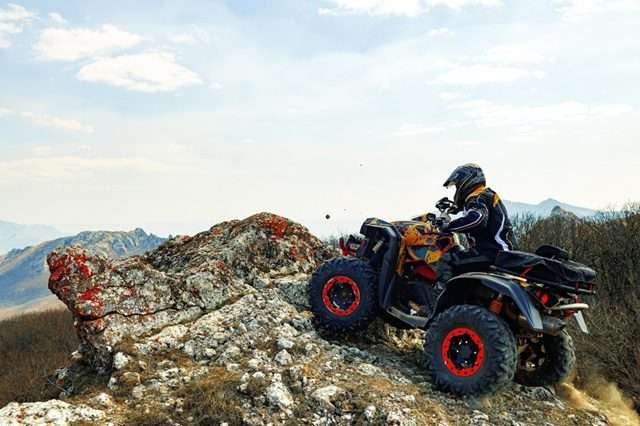
Before quad bikes, managing land in the countryside meant walking miles to/from tasks or having to splash out on hundreds of thousands of pounds worth of machinery with operator cabins and original equipment. Work on the farm involved a lot of walking and distance. Managing one’s estate either meant taking a lot of time to get things done or needing an extensive amount of capital investment. But then quad bikes emerged, and overnight, they revolutionised the day-to-day approach to outdoor work.
Not only did quad bikes ensure one didn’t need to walk so much, but also, one person’s daily volume of work was transformed. What could have taken multiple trips or truly used a lot of hands to work could now be accomplished by one person with a quad bike. The isolated parts of properties that would go neglected could now be visited regularly. Across all sectors that worked outside this had a tremendous impact — agriculture, game keeping, countryside management, conservation, and more.
Opening Up Previously Unusable Land
Before the proliferation of quad bikes, there were always parts of properties that went unused—or at least not used as they could be. Steep hillsides, boggy land, and distant corners of estates went untouched. Farmers would work in valleys, focusing their energies on workable soil without concern for other areas, letting steep parts or rough parts just sit.
The arrival of capable all-terrain vehicles transformed this completely. Land that seemed impractical suddenly became workable. Farmers could check livestock across entire properties multiple times daily rather than once a week. Gamekeepers gained the ability to monitor and manage remote woodland areas that previously required exhausting hikes.
For anyone looking to understand the capabilities modern machines offer, exploring options such as a quad bike from manufacturers who focus on genuine all-terrain performance shows just how far the technology has come.
Accessibility was no longer about merely getting from Point A to Point B. It was about using land that may have been wasted. Hillsides could offer grazing space. Woodlands could be looked after by the gamekeeper, and even further away from the main house, attention to detail was able to increase access across properties without an investment in acreage.
Changing the Day-to-Day
Even working day-to-day transformed. Traditionally, on a farm, one needed to tailor one’s day around expectations due to travel times. The two-hour foray into morning livestock checks took one away for the majority of the morning. The need to carry supplies from one spot to another meant planning or incurring many blisters from back-and-forth trips.
Quad bikes lessened these burdens. Morning checks over dispersed livestock were now within minutes as opposed to traversing an entire property. Traveling with tools, supplies, or feed was no longer arduous. One decent driver could now accomplish what previously would take quite a few men.
Additionally, it was no longer about making time for these journeys — it was about changing how people approached problems. If there was an issue with fencing in the middle of nowhere or something happened to livestock at the far edge of town, chances are little could be done until the next loop through. But with quad bikes, one could respond immediately and change their approach.
Viability of Solo Operations
Perhaps the greatest change was in expected labor volume. If one were going to work a small farm or estate alone, they would always be faced with the decision to hire help for seasonal work or manage on their own, working impossible hours just to get everything done, or leaving everything looking shoddy since they could never do it all.
Yet with a quad bike, there became a compromise. One person’s volume needed for a smaller work team was transformed overnight into what one person could accomplish. A farmer could check and tend to feeding across several fields for sheep or fencing adjustments, all before lunch. An estate manager could now devote the whole day to maintenance, but never got off focus, as they didn’t need a whole day merely to walk.
Additionally, seasonal work took on new meaning. During peak times, relying on a machine to boost potential individualized productivity allowed peak volumes to be matched without bringing someone else in as an emergency effort. The same person dedicated year-round could ramp it up for harvest time, lambing season, let alone maintenance of hedgerows.
Going Beyond Pure Usefulness
Finally, this transformation stretched beyond farming into recreation and conservation work. Countryside rangers could patrol larger areas more efficiently. Equestrian endeavors were able to manage riding paths/paddocks more quickly than ever before. Recreational efforts found joy off the back of quad bikes—exploration potential was vastly superior to that of hiking trails.
Conservation work benefited enormously. Managing nature reserves or woodland often requires reaching remote areas with equipment and materials. Quad bikes made practical what had been theoretically possible but physically exhausting. Habitat management, invasive species control, and monitoring programs all became more achievable.
The Ongoing Transformation
Looking back, it’s clear quad bikes didn’t just add a new tool to outdoor work – they redefined what was realistic for individuals and small operations to accomplish. Properties that seemed too large to manage became workable. Tasks that required teams became solo jobs. Land that sat idle became productive.
The revolution wasn’t about technology for its own sake. It was about removing barriers that had limited outdoor work for generations. Distance, terrain, and physical capability no longer became insurmountable obstacles. That shift opened possibilities that continue to reshape how people approach rural work and land management today.

