
When pursuing a car accident claim in Nevada, the right evidence can make all the difference. Surveillance footage—whether captured by dashcams, traffic cameras, or local businesses—provides a unique and objective window into the events leading up to a collision. For anyone facing the aftermath of a crash, working with a top car accident lawyer in Las Vegas can help ensure surveillance evidence is secured and used effectively within a claim. These visual records can verify facts, address uncertainties, and bolster your case if another party disputes your version of events.
Clear video evidence often decides fault in negotiations and court cases, helping victims present irrefutable facts. Properly collected footage can lead to quicker, more favorable outcomes. In Nevada, surveillance not only persuades drivers and insurers but also influences law enforcement and civil lawsuits.
Promptly collecting and preserving video evidence is vital, as many cameras overwrite footage quickly. Acting fast to identify and contact camera owners increases the chances of obtaining valuable footage. An attorney can help expedite this process and ensure compliance with legal requirements.
Importance of Surveillance Footage
Surveillance footage acts as a neutral witness in car accident cases, capturing what actually happened without bias. Unlike human memory, which can fade or become distorted over time, video evidence remains consistent, providing judges, juries, and insurance adjusters with a reliable record of events.
In Nevada, this objectivity is invaluable—especially when crash participants present conflicting stories or when witness statements contradict one another. Footage can reveal factors such as traffic light states, vehicle speeds, and the precise locations of each vehicle, making it easier to establish fault and resolve disputes.
Types of Surveillance Footage
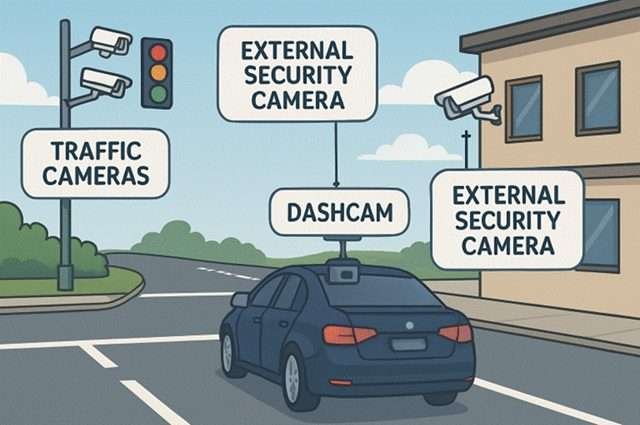
Video evidence can come from a variety of sources, each offering unique advantages:
- Dashcams: Personal cameras installed in vehicles, offering continuous footage from the driver’s perspective.
- Traffic Cameras: Government-operated cameras at intersections or highways, primarily for monitoring traffic flow.
- Security Cameras: Installed by businesses, residences, or public venues, sometimes capturing adjacent street activity and accident scenes.
Identifying the right source often requires reviewing the accident scene for nearby properties, poles, or intersections that may have captured the incident from a helpful angle. Major news outlets report that the rising popularity of dashcams is increasingly influencing accident investigations and helping drivers avoid liability for accidents they did not cause.
Dashcams as Personal Evidence
Dashcam footage is one of the most effective forms of evidence available to Nevada drivers in car accident cases. Since drivers control the device, dashcams are often the quickest video resource available after an incident. In Nevada courts, dashcam video is usually admissible if it hasn’t been edited or tampered with, and if it’s clearly relevant to the case.
Footage showing traffic lights, signage, or the actions of other drivers can directly rebut accusations of speeding or negligent behavior, putting you in a much stronger position during negotiations or trials.
Traffic Cameras and Their Limitations
Many expect that Nevada’s abundant roadside traffic cameras automatically provide accident video, but this isn’t always the case. The Nevada Department of Transportation primarily uses these cameras to observe road conditions and manage real-time incidents; most do not store footage for later retrieval.
As a result, while these cameras offer useful live feeds, accident victims must often rely on other nearby cameras or personal footage. Understanding these limitations can help victims act quickly to identify other sources of video evidence before footage is overwritten.
Legal Admissibility in Nevada
Nevada law generally allows surveillance video as court evidence if three criteria are met: the recording must be relevant to the claim, the footage must be proven authentic, and it must not be altered in any way. Still, the process of submitting evidence is nuanced, with experienced attorneys often navigating chain-of-custody and privacy issues to ensure footage supports their client’s case.
Steps to Obtain Surveillance Footage
To effectively gather video evidence after an accident, first identify all possible cameras in the vicinity of the scene, including those from residential, business, and municipal sources. It is crucial to request the footage immediately, as recordings may be deleted within days. This can be done by visiting or calling the property owner or the camera’s owner.
Collaborating with an attorney is advisable, as they can assist in drafting formal requests, subpoenas, or preservation letters, which can significantly enhance the likelihood of successfully obtaining and utilizing the footage for your claim.
Impact on Insurance Claims
Today’s insurance companies are increasingly recognizing the value of video evidence in settling disputes rapidly. When claimants submit objective footage, adjusters can quickly reconstruct the accident, determine fault, and process claims, often avoiding lengthy investigations or courtroom battles.
This efficiency benefits everyone involved; victims receive faster settlements, and claims adjusters minimize ambiguities and disputes. The presence of camera evidence is reshaping how insurers assess claims and protect policyholders’ interests.
Conclusion
Surveillance footage stands as one of the most potent forms of evidence in Nevada car accident claims. Acting quickly to preserve video, understanding the various types of available footage, and adhering to state rules for admissibility can significantly impact the outcome of an insurance claim or lawsuit. For Nevadans involved in a car accident, knowing how to secure and effectively use this evidence—often with the help of an experienced attorney—remains crucial for a successful claim resolution.

